Source Dust Suppression Water Trucks for Mining, Construction, and Road Dust Control
Buyers can compare 30 dust suppression water truck listings covering tank volumes from 10,000 to over 30,000 liters, diesel and electric drivetrains, spray ranges up to 38 meters, and reinforced steel tank construction, with customization available and specifications suitable for mining sites, construction projects, and municipal road dust control.
Key considerations
Products List


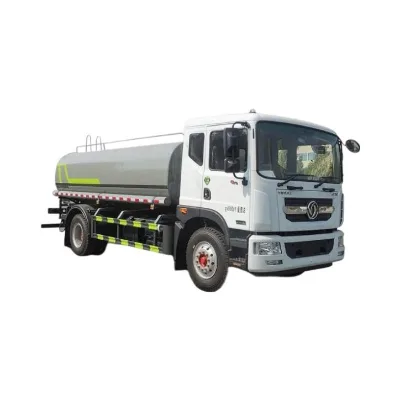


Dongfeng 16 Cbm Road Mining Dust Suppression Truck with Water Mist Cannon
$24500.00 - $30000.00
Moq: 1


Comprehensive Sourcing Guide
Dust Suppression Water Truck Sourcing Guide
Sourcing a dust suppression water truck requires a careful balance between hydraulic performance, chassis durability, and regulatory compliance. These specialized vehicles are engineered to mitigate airborne particulates in construction zones, mining operations, and large-scale industrial sites. Buyers must navigate a market where specifications vary significantly based on the intended operational environment, from high-volume municipal street cleaning to targeted industrial misting. The procurement process demands a rigorous verification of tank capacity, pump efficiency, and spray mechanics to ensure the selected unit meets the specific dust control requirements of the job site.
The decision to procure a new unit often hinges on the availability of customization options and the specific technical constraints of the local fleet management system. Modern suppliers offer extensive customization, allowing buyers to tailor the vehicle to precise operational needs, such as adjusting the sprinkling area or modifying the tank volume. However, this flexibility introduces complexity in the verification process, as buyers must ensure that custom configurations do not compromise the structural integrity of the chassis or the reliability of the hydraulic systems. Understanding these trade-offs is essential for making a cost-effective and operationally sound procurement decision.
Product Scope and Observed Listing Signals
The current market for dust suppression water trucks presents a wide range of options, with observed listing prices spanning from approximately $6,875 to $158,309 USD. This broad price spectrum reflects the diversity in chassis quality, engine power, and specialized equipment installed on each unit. Buyers should recognize that the lowest price points may correspond to basic configurations with smaller tank capacities or older chassis models, while higher price tiers typically include advanced emission-compliant engines, larger volumes, and enhanced spray systems. The minimum order quantity (MOQ) is consistently observed at one unit, indicating that these vehicles are typically sold as individual assets rather than in bulk batches, which simplifies the procurement process for single-site deployments.
A critical observation in the current listings is the discrepancy between stated tank volumes and load capacities. Some products advertise tank volumes exceeding 30,000 liters, while others list effective volumes between 9.7 and 10.1 cubic meters. This variation suggests that buyers must carefully distinguish between gross tank capacity and usable volume, as well as the impact of the water weight on the vehicle’s total mass. For instance, one observed model lists a total mass of 18,000 kg with a curb weight of 8,780 kg, resulting in a payload capacity of approximately 9,205 kg. This aligns with a rated load capacity that must be respected to avoid overloading penalties and ensure road safety. Buyers must verify that the water volume does not exceed the chassis’s rated payload, especially when considering the weight of the water itself, which adds significant mass to the vehicle.
Technical Specifications to Verify
When evaluating technical specifications, the engine and emission standards are paramount, particularly for operations in regions with strict environmental regulations. The observed data indicates a mix of diesel-powered units, with engine capacities ranging from 4 to 6 liters and greater than 8 liters, corresponding to Euro emission standards. Buyers must verify the specific Euro standard (e.g., Euro 5 or Euro 6) to ensure compliance with local air quality laws. Additionally, the horsepower ratings observed between 351 and 450 hp suggest that these are heavy-duty vehicles capable of handling significant loads and maintaining speed on varied terrains. It is crucial to match the engine power to the expected operational demands, such as frequent stops and starts or long-distance travel between water refill points.
The hydraulic and spray systems are the core functional components of a dust suppression truck, and their specifications must be meticulously reviewed. Key metrics include the pump head, flow rate, and spray width. Observed data points to a pump head of 110 meters and a flow rate of 50 cubic meters per hour, which are indicative of high-performance units suitable for large-area coverage. The sprinkling area is typically listed between 8 and 12 meters, with specific models offering a flushing width of 24 meters and a rear sprinkler width of 14 meters. Buyers should also consider the rear water cannon range, which can extend up to 38 meters, providing flexibility for targeting dust sources from a distance. Furthermore, the droplet particle size, observed between 50 and 150 micrometers, is a critical factor in dust suppression efficiency, as finer particles are more effective at capturing airborne dust.
Compliance and Safety Documentation
Compliance with international and regional standards is a non-negotiable aspect of sourcing heavy machinery. The observed certifications include ISO, CCC, ECE, GCC, and DOT, which indicate that the vehicles meet various safety and quality benchmarks. Buyers must verify which of these certifications are valid and recognized in their target market, as acceptance varies by country. For example, ECE certification is essential for European markets, while DOT is required for the United States. The presence of these certifications suggests that the manufacturers adhere to rigorous testing protocols, but buyers should request copies of the actual certification documents to confirm their validity and scope.
Safety documentation also extends to the structural integrity and manufacturing standards of the vehicle. The observed data highlights the use of laser bonding for welding and a derusting grade of SA3.0, which are indicators of high-quality construction. The thickness of the steel plate is specified as 8mm, providing durability against the corrosive effects of water and environmental exposure. Buyers should ensure that the vehicle’s design includes multiple reinforced ribs to strengthen the tank structure, preventing leaks or structural failure under the weight of the water. Additionally, the tire design is noted as tubeless, with certifications from ECE, GCC, ISO, and DOT, ensuring that the tires meet safety standards for load-bearing and roadworthiness.
Cost Drivers and Commercial Terms
The cost of a dust suppression water truck is influenced by several key drivers, including the chassis model, engine specifications, and the complexity of the spray system. The observed chassis models, such as EQ1180gsz6DJ and EQ1185TDY6, represent different base platforms that affect the overall price. Buyers should compare the total cost of ownership, which includes not only the purchase price but also maintenance, fuel consumption, and potential downtime. The power source is another significant factor, with diesel engines being the most common, but electric options also appearing in the market. One observed electric model features a power battery capacity of 231.1 kWh and a cruising range of 360 km, which may offer lower operating costs in specific urban environments with access to charging infrastructure.
Commercial terms such as packing and shipping methods also impact the final landed cost. The observed packing methods range from standard packaging to customized solutions, with sea transportation being a common mode for international shipments. Buyers should clarify who is responsible for the packing and loading processes, as improper packing can lead to damage during transit. The lead time for production and delivery is not explicitly stated in the observed data, but buyers should negotiate clear delivery schedules and penalties for delays. Additionally, the customization options available, such as adjusting the tank volume or spray width, may incur additional costs and extend the production timeline, so these should be agreed upon early in the procurement process.
Supplier Qualification and Quality Control
Supplier qualification is a critical step in ensuring the reliability of the purchased equipment. Buyers should verify the supplier’s manufacturing capabilities, particularly their ability to perform laser bonding and adhere to SA3.0 derusting standards. The observed production origin in Suizhou City, Hubei Province, China, indicates a concentration of specialized vehicle manufacturers in this region. Buyers should conduct due diligence on the supplier’s reputation, including their history of delivering compliant vehicles and their after-sales support structure. Requesting references from previous clients can provide insights into the supplier’s reliability and the performance of their vehicles in real-world conditions.
Quality control measures should be integrated into the procurement process to minimize the risk of receiving defective units. Buyers should insist on pre-shipment inspections that verify the tank volume, pump performance, and spray mechanics. The observed specifications, such as a low-pressure cleaning water flow rate of 600-800 liters per minute and a spray machine range of 7.98 liters per minute, should be tested on-site or at a designated testing facility. Additionally, buyers should verify the vehicle’s dimensions, which are listed as 12,995x2,550x3,960 mm for one model and 8,590x2,500x2,930 mm for another, to ensure they fit within the operational constraints of the job site. Establishing a clear quality assurance protocol with the supplier can help prevent costly disputes and ensure that the delivered vehicle meets the agreed-upon specifications.
Long-Term Procurement Checks
Long-term procurement success depends on the availability of spare parts and the supplier’s commitment to after-sales service. Buyers should inquire about the warranty period and the coverage it provides for critical components such as the pump, engine, and hydraulic system. The observed transmission type is manual, which may require specific maintenance expertise, so buyers should ensure that their maintenance team is trained or that the supplier offers training services. Additionally, the customization options available, such as the ability to adjust the sprinkling area, should be supported by the supplier’s technical team to ensure that any modifications do not void the warranty or compromise the vehicle’s performance.
Regular maintenance and performance monitoring are essential for extending the lifespan of the dust suppression water truck. Buyers should establish a maintenance schedule that includes regular checks of the tank integrity, tire pressure, and spray nozzle condition. The observed tire certifications and steel plate thickness suggest that the vehicles are designed for durability, but proper maintenance is still required to prevent premature wear. Buyers should also consider the environmental impact of the vehicle, particularly if it is a diesel-powered unit, and explore options for upgrading to cleaner technologies as regulations evolve. By maintaining a proactive approach to procurement and maintenance, buyers can ensure that their dust suppression water trucks remain effective and compliant throughout their operational life.
FAQs
How much water can a dust suppression water truck carry per load?
Carrying capacity depends on the chassis and tank configuration, and listed options range from roughly 10,000 to over 30,000 liters. Smaller 4x2 units around 10,000 to 15,000 liters suit urban roads, while heavier 6x4 or 8x4 configurations with reinforced tanks handle mining and construction sites where payloads exceed 50 tons. Confirm total mass limits against your local regulations before ordering.
What spray coverage should I expect from a dust suppression water truck?
Typical configurations offer a sprinkling area of 8 to 12 meters, a rear sprinkler width of about 14 meters, and a flushing width up to 24 meters. Rear water cannons can reach around 38 meters for spot washing or slope wetting. Actual coverage varies with pump pressure, nozzle selection, and operating speed, so review the specification sheet for the exact model.
Which chassis and emission options are available for these trucks?
Listed models use diesel engines with capacities above 8 liters on heavy 6x4 drives and 4 to 6 liters on lighter 4x2 drives, meeting Euro emission standards. A battery-electric variant is also available with a 231.1 kWh power battery, 200 kW peak motor power, a 360 km cruising range, and a 90 km/h maximum speed. Choose based on site conditions and local emission requirements.
Can the tank and spray system be customized for specific site needs?
Yes, customization is available on listed products. Buyers can specify tank volume, steel plate thickness, reinforcement, pump flow rate, and spray equipment to match mining, port, or municipal applications. Standard configurations include a 50 cubic meters per hour pump with 110 meters of head, and additional reinforced ribs and laser bonding improve tank durability. Discuss your duty cycle with the supplier before finalizing drawings.
What construction quality features protect the tank from corrosion?
Listed tanks use 8mm steel plate with a SA3.0 derusting grade, which is a near-white blast cleaning standard that prepares the surface for coatings. Laser bonding welding and multiple reinforced ribs add structural strength for full loads and rough terrain. These measures reduce cracking and rust risk, but regular washing and coating inspection remain important in corrosive or high-dust environments.
How are dust suppression water trucks packed and shipped?
Shipping is arranged according to the actual condition of the unit, with sea transportation as the listed packing method, and standard packaging or customized packing is also available. Larger units may be shipped as complete vehicles or disassembled for container loading depending on destination port rules. Confirm dimensions such as 8300x2500x3550mm or 12995x2550x3960mm against vessel and road limits.
What certifications should I verify before purchasing?
Listed products carry ISO and CCC certification, and tires are certified to ECE, GCC, ISO, and DOT standards, covering major export destinations. Verify that the specific unit you order includes the certificates matching your registration country, since requirements differ by market. Ask for certificate copies and check that the vehicle identification, tank volume, and axle configuration match the approval documents.
Which drive configuration suits heavy-duty mine and quarry work?
For mining and quarry roads, a 6x4 diesel configuration with an engine capacity above 8 liters and horsepower in the 351 to 450 hp range is generally suitable, and listed heavy models support payloads over 50 tons. Tubeless tires with ECE or DOT certification improve reliability on rough surfaces. Lighter 4x2 units are better suited to paved municipal roads and moderate distances.